Exclusive: Tehran does not want to block Strait of Hormuz, Iranian ambassador tells Euronews
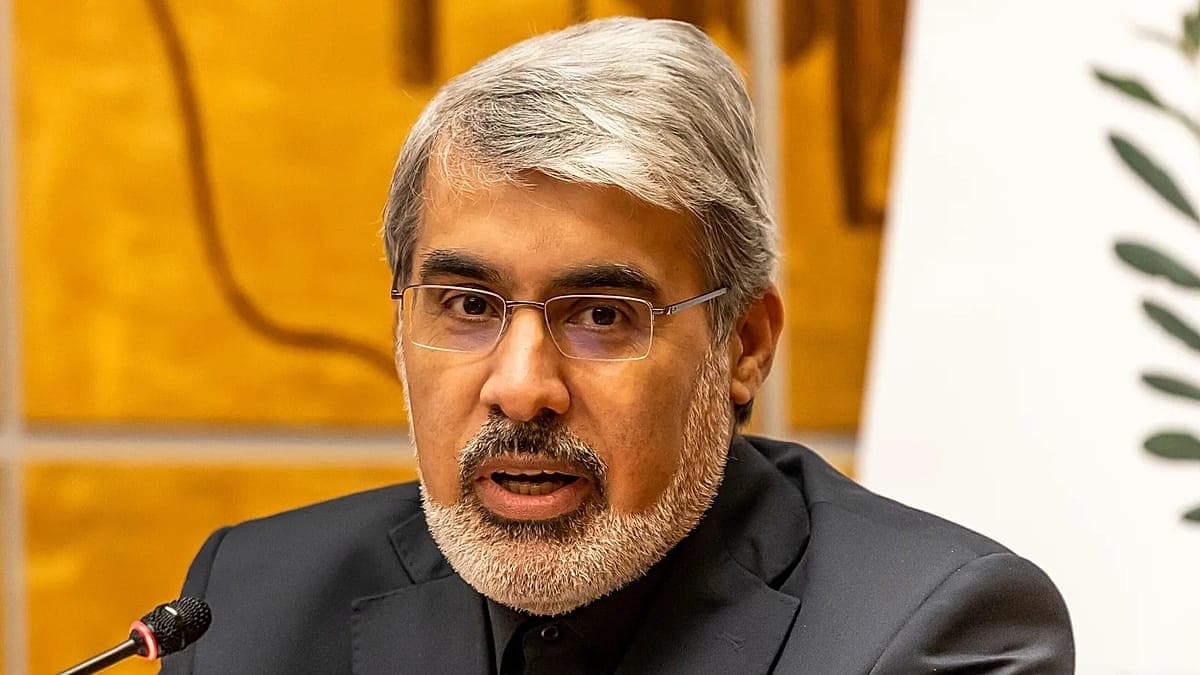
Iran’s ambassador to the United Nations in Geneva told Euronews on Thursday that Tehran "does not have any intention to block the Strait of Hormuz,” contradicting the first public statement of the newly-chosen ayatollah who threatened the opposite.
Iran’s ambassador to the United Nations in Geneva told Euronews on Thursday that Tehran "does not have any intention to block the Strait of Hormuz,” contradicting the first public statement of the newly-chosen ayatollah who threatened the opposite.
“Iran has not any intention to block the Strait of Hormuz. Whatever situation the state of Hormuz is suffering from is because of the war imposed on the region. There is a war around the Straight of Hormuz. There is the exchange of fire," Ambassador Ali Bahreini said.
Euronews spoke to Iran’s ambassador to the UN just hours before Tehran released the first statement from the new Ayatollah Mojtaba Khamenei, who reportedly vowed to keep the Strait of Hormuz closed in order to pressure Iran’s enemies, according to a statement read on state-run TV.
The comments are relevant as the international community assesses who is in control of Iran after the killing of his father the late Ayatollah Ali Khamenei at the start of the Iran war.
Mojtaba Khamenei has not been seen in public since the war's onset amid reports he has been injured in the initial strike on his father on 28 February, with contradictory claims stating he was either lightly wounded or fully incapacitated as a consequence.
Adding to the confusion, Iran’s ambassador to the United Nations said Tehran “keeps believing that the Straight of Hormuz is the Straight of Peace” even after intelligence reports said Iran plans to mine the waterway, critical for the transport of energy, in a sign of escalation.
“We are trying to make it secure”, Bahreini stated, adding that the corridor “should be and it can be used by everybody as far as there is no any threat, as far as there no any war on that region.”
“It has been announced by our officials that the only limitation or restraint that we will impose — is on the ships belonging to those countries who have any kind of involvement in the war against Iran.”
Since 28 February, Tehran has been targeting neighbouring countries' energy facilities and cargo ships in Hormuz in a bid to inflict damage to the world's energy trade and destabilise global markets.
Two oil tankers — one under the Marshall Islands flag and the second one Greek-owned and Maltese-flagged — were hit off Iraq on Wednesday.
The attack resulted in the death of at least one person, and oil prices briefly soared past $100.
About one-fifth of the world’s oil and liquid natural gas production usually passes through the Strait of Hormuz, a vital chokehold controlled by Tehran.
Bahreini admitted that Iran is not happy with the impact on the global economy, but said that Tehran will not stop fighting.
“It will affect the economy of Iran, too. We do not reject it. But Iran is a resilient country, both at economic level and military level.”
Iran’s ambassador to the United Nations in Geneva told Euronews on Thursday that Iran is ready for a prolonged war.
“Iran is ready to defend itself as far as it is needed," Bahreini said.
Echoing the recent statement of his Foreign Minister Abbas Araghchi who said that Tehran had “two decades to study defeats of the US military to our immediate east and west” and has “incorporated lessons accordingly”, Bahreini stated Iran "had been prepared for this situation”.
“While we were negotiating, our military forces assessment was that the threat is imminent," Bahreini said.
"Our country has prepared itself for a war as far as it is needed and to the point that we make sure that the aggression is stopped and there would be no any potential for a new aggression against our country.”
At the same time, the Iranian ambassador reiterated that Tehran was willing to negotiate as he accused the US of abandoning diplomacy.
Bahreini claimed Washington has not been winning now, two weeks into the war.
"The United States was suffering from a big miscalculation. What they had the intention to do, all of that was failed because they believed that they were able to defeat Iran in a few days.”
Nearly two weeks of the US-Israeli airstrikes have degraded much of Iran’s air defence system and military capacity, according to reports, while US President Donald Trump said earlier this week that the Iran war was "very complete".
http://www.euronews.com/2026/03/12/exclusive-tehran-does-not-want-to-block-strait-of-hormuz-iranian-ambassador-tells-euronews